
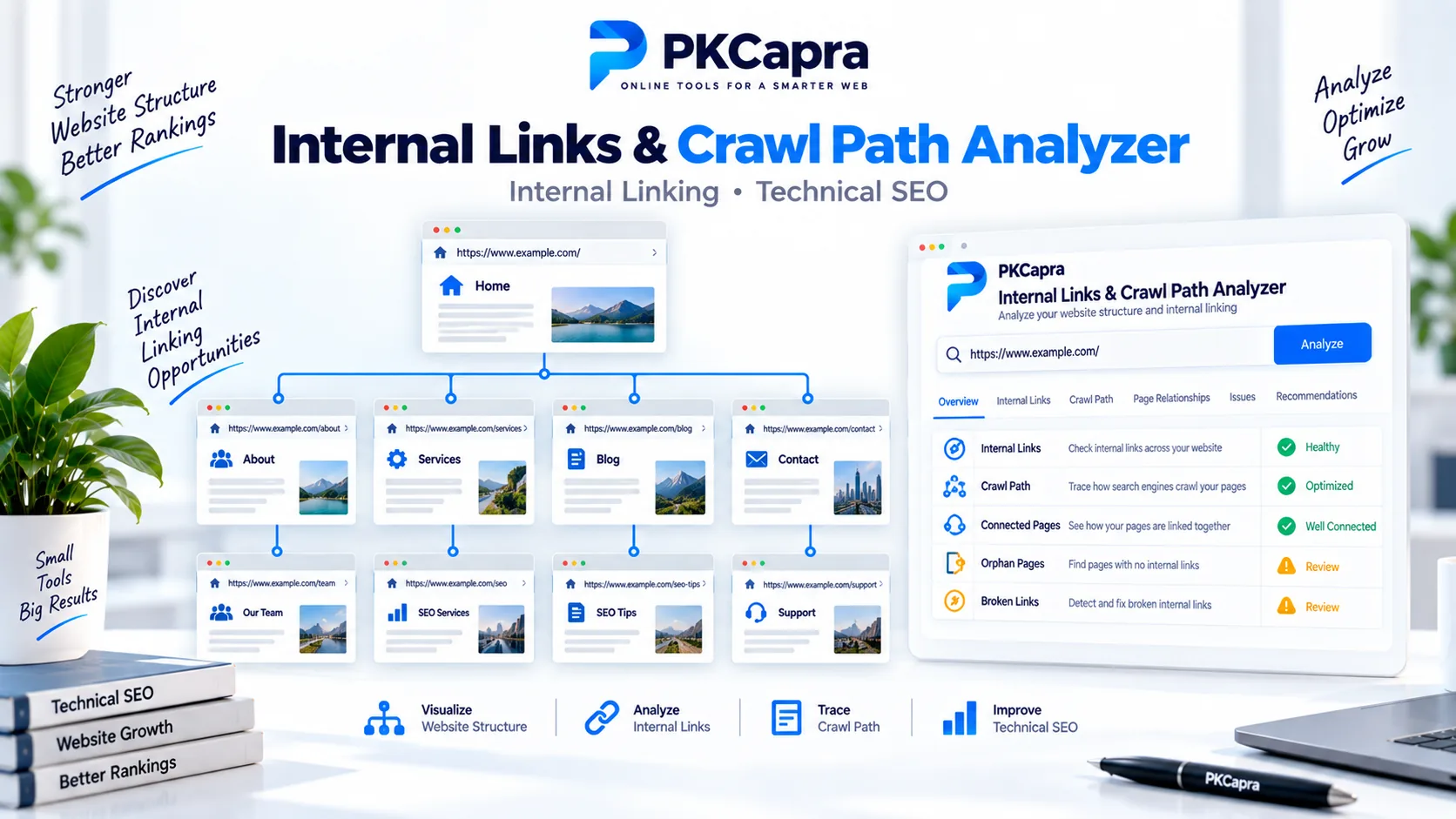
Internal Links & Crawl Path Analyzer helps you review the internal linking structure of a website and understand how pages connect through internal links. With this tool, you can examine internal linking patterns and crawl paths to identify areas that may need further technical SEO investigation.
PKCapra Internal Links & Crawl Path Analyzer
Analyze a public site's internal-link structure, crawl paths, anchor labels, redirects, HTTP errors, canonical consistency and noindex link conflicts.
Public crawl only. A limited crawl cannot prove that a page is globally orphaned.Check Internal Links and Crawl Paths
Internal links connect pages within a website and help users and search engines move between related content. Therefore, a clear internal linking structure can make a website easier to navigate and understand.
However, websites can develop broken, weak, excessive, or unnecessarily complicated linking paths as they grow. For this reason, reviewing internal links can form an important part of a technical SEO audit.
What Does an Internal Links & Crawl Path Analyzer Check?
An Internal Links & Crawl Path Analyzer helps you review how pages connect through internal links and how a crawler can move through the website structure. As a result, you can get a clearer view of the relationships between pages.
In addition, reviewing crawl paths can help you investigate whether important pages sit within a logical linking structure. For example, you may discover pages that require more internal links or paths that deserve closer attention.
Why Internal Linking Matters for SEO
Internal links provide connections between pages and help establish relationships within a website. For example, a relevant article can link to a related service page, category, or useful resource.
Therefore, internal linking can support both website navigation and technical SEO. At the same time, adding links simply for the sake of increasing link counts does not create a better structure.
Instead, focus on relevant connections that help users discover useful content and help search engines understand how your pages relate to each other.
How Crawl Paths Affect Website Structure
A crawl path describes the route a crawler can follow through internal links. For instance, a page that connects naturally from important sections of a website may have a clearer path than a page that receives little or no internal linking.
As a result, reviewing crawl paths can help you understand how your website distributes connections between pages. In addition, it can highlight areas where your internal structure may need further investigation.
How to Use the Internal Links & Crawl Path Analyzer
First, open the Internal Links & Crawl Path Analyzer on PKCapra. Next, provide the website or page information requested by the tool. Then, start the analysis and review the results.
Afterward, examine the internal linking information and crawl paths identified by the tool. Finally, investigate any areas that may need improvement and update your website structure when appropriate.
When Should You Check Internal Links?
You can review internal links during regular technical SEO audits. For example, checking your internal linking structure can be useful after a website redesign, migration, URL restructuring, or major content update.
Similarly, you can review internal links when publishing a large amount of new content. In addition, regular checks can help you identify pages that may need stronger contextual connections.
Therefore, internal link analysis can become a useful part of an ongoing technical SEO workflow.
Technical SEO Tools from PKCapra
Internal linking works alongside several other technical SEO areas. For example, you can use the Indexability & Crawlability Analyzer to review technical signals related to search-engine access and indexing.
Similarly, the XML Sitemap Analyzer can help you review sitemap-related information. In addition, the Robots.txt Analyzer can help you examine your robots.txt configuration.
Furthermore, you can use the Meta Tags Analyzer to review important page metadata.
For a broader selection of confirmed tools, visit the All Free Online Tools directory.
Tips for Improving Internal Links
First, link related pages together when the connection provides genuine value to visitors. Next, use descriptive anchor text so users can understand where a link leads.
Also, pay attention to important pages that receive very few internal links. This way, you can identify parts of your website structure that may need further attention.
Finally, review your internal links after deleting pages, changing URLs, reorganizing categories, or publishing major content updates. As a result, you can keep your internal linking structure more consistent as the website grows.
Frequently Asked Questions
What is an Internal Links & Crawl Path Analyzer?
An Internal Links & Crawl Path Analyzer is an SEO tool that helps you review internal links and understand how pages connect through a website’s crawl paths.
Why are internal links important for SEO?
Internal links help connect related pages and provide pathways through a website. Therefore, they can support website navigation and help search engines understand relationships between pages.
What is a crawl path?
A crawl path is the route a crawler can follow through links and connected pages on a website. Reviewing these paths can help you understand how your website structure connects different pages.
How often should I check internal links?
You can check internal links during regular technical SEO audits and after major changes such as migrations, redesigns, URL restructuring, or large content updates.
Can internal links affect website navigation?
Yes. Well-organized internal links can make it easier for visitors to discover related pages and move through a website.
Analyze Your Internal Links and Crawl Paths
Ready to review your website structure? Use the Internal Links & Crawl Path Analyzer from PKCapra to examine internal linking patterns and crawl paths and identify areas that may need further investigation.
Helpful SEO Resource
For additional information about website crawling and search-engine discovery, you can review Google’s official documentation on how Search works. This provides useful background alongside the technical analysis available through PKCapra.